Cretan Federation supports Foundation
Nearly 30 000 Australians became prisoners of war during World War 2. Of the Australian prisoners in Europe, 264, about 3 per cent died. One who did survive was Weary Dunlop, a doctor in the Australian Army, who provided medical treatment and inspirational leadership for the men under his care.
As a Prisoner of War himself, Sir Edward Dunlop was very well aware of the impact of war service on Veterans and their families. He strongly believed that this warranted greater attention, and typically, resolved to do something about it.
In 1985 his drive led to the creation of the Sir Edward Dunlop Medical Research Foundation, to encourage emerging medical researchers to study health conditions of Veterans, serving personnel, and their families. The health and well-being of those who have served and sacrificed remains vitally important today, and the Weary Dunlop Foundation continues to pursue the vision inherited from this truly great Australian.
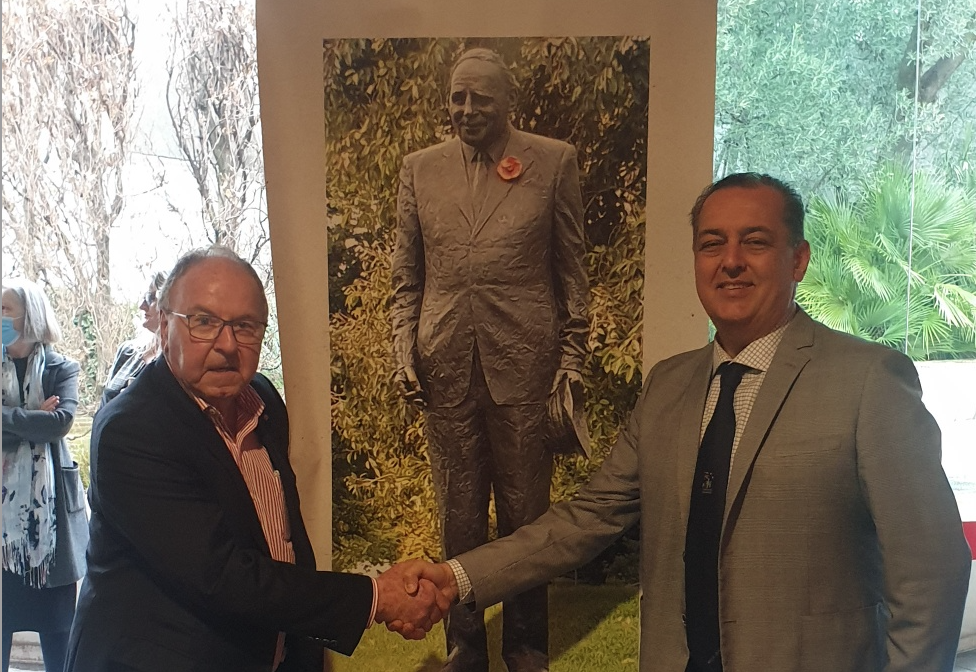
On Tuesday 12th July 2022, the Weary Dunlop Foundation hosted an event at the Auditorium of the Shrine of Remembrance launching the fundraising campaign in his honour. The Cretan Federation of Australia & New Zealand was acknowledged as a supporter of the Foundation in memory of his service to the people of Crete, during the Battle of Crete in 1941.
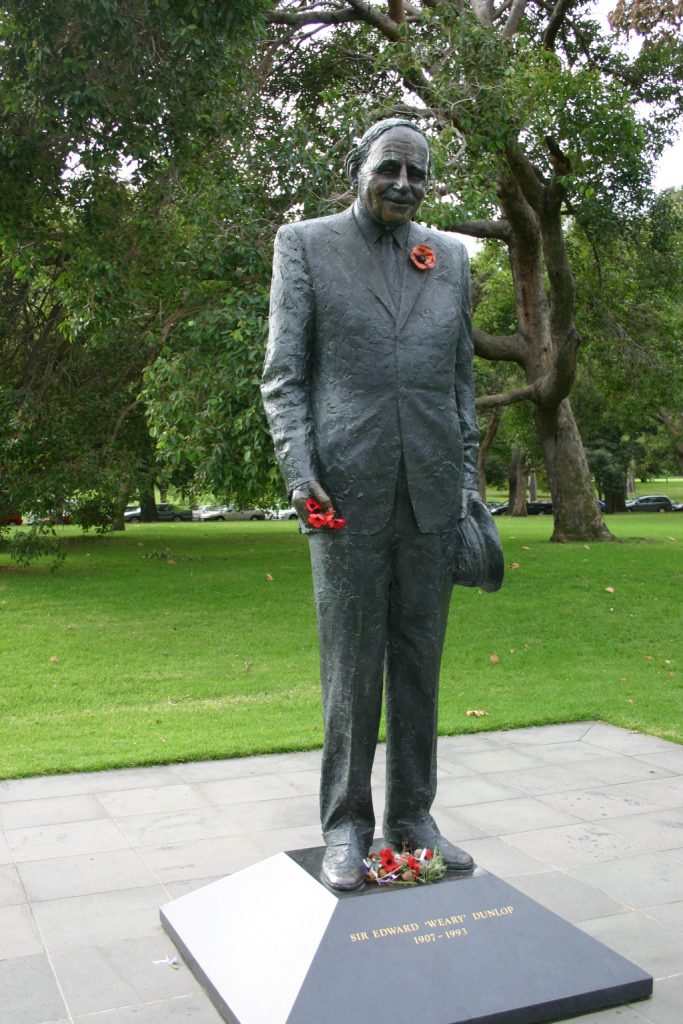
Biography
Dunlop was born in Wangaratta, Victoria, the second of two children of parents James and Alice. He attended Benalla High School for two years of his education. He started an apprenticeship in pharmacy when he finished school, and moved to Melbourne in 1927. There, he studied at the Victorian College of Pharmacy and then the University of Melbourne, where he obtained a scholarship in medicine. Dunlop graduated from the University of Melbourne in 1934 with first class honours in pharmacy and in medicine, and excelled as a sportsman at Melbourne University and Ormond College. The nickname “Weary” was a reference to his last name—”tired” like a Dunlop tyre.
During World War II, Dunlop was appointed to medical headquarters in the Middle East, where he developed the mobile surgical unit. In Greece he liaised with forward medical units and Allied headquarters, and on Crete he was a surgeon until the Australian Divisions were withdrawn for home defence.